
Analysts expect RIL to report consolidated revenue of Rs 1.40 trillion and 10 analysts expect RIL's net income to be Rs 9,629 crore

New investment projects announced in the manufacturing sector declined in the three months ended June 2023. The value of new projects was lower than in the March quarter, as well as the year-ago period, shows data from project tracker the Centre for Monitoring Indian Economy (CMIE). The new project announcements worth around Rs 85,000 crore in the manufacturing segment in June were a 48 per cent decline from the Rs 1.6 trillion in March and a 66 per cent decline from the Rs 2.5 trillion seen in June 2022.

The oil industry experienced three upheavals between 1973 and 1991, which seem to be etched in the memory of the industry's decision makers. Naturally, at the sign of a new crisis, the decision makers like to dip into those tumultuous decades to find ways to deal with the new shock, in addition, of course, to expert reports and forecasts. So, the industry bigwigs turned the pages of history to get a peek into the future of oil price movements after Russia invaded Ukraine in 2022, Israel attacked Gaza in 2023, Iran-linked Houthi rebels pounded tankers crossing the Red Sea in support of Palestine the same year, and Iran rained missiles on Israel in 2024.

As markets complete the first half of the calendar year 2022 (CY22) with a fall of around 9 per cent, the interest-rate hike trajectory by global central banks, paired with the conundrum of inflation and growth, will move the needle for the market, observe experts. Here's a quick rundown on what they'll react to over the next six months.

Bajaj Finance's quarterly business update, coupled with around 24 per cent fall over the past six months, has turned risk-reward favourable for investors, observe analysts. They see up to 39 per cent upside in the stock, from a one-year perspective. Global brokerage CLSA, for instance, has upgraded the stock from 'underperform' to 'outperform' with an increased one-year target price of Rs 6,600 (vs Rs 6,000 earlier) as it believes the risk-reward has turned favourable for the counter, and there is scope for expansion if growth remains robust.

FMCG stocks have underperformed the market, falling 2.2 per cent so far in 2014.

Does the rally reflect expectations of improving fundamentals or they are likely to correct?
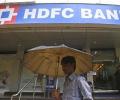
With the merger between HDFC Bank and HDFC Ltd complete, analysts said the next key monitorable for the Street would be successful resolution of merger-related hiccups, including employee-related churn and roll out of complete banking services across branches. At the bourses, they expect the stock to perform in-line with the benchmark indices in the near-term. "There's usually an initial period of consolidation after a merger as the entities work towards integration.

Most brokerages have maintained their Sensex and Nifty targets as they believe there is little room for further re-rating in the backdrop of weak earnings.

Year-to-date, the rupee is the worst-performing currency in Asia, weakening 4.184 per cent against the US dollar.

With March 2016 being the final quarter when banks will have to disclose their stressed assets, the markets are assuming the worst is yet to come

Logistic players have seen a sharp correction at the bourses over the past six months as intense competition from new-age-tech startups, higher freight rates, and weak macros dented listed players' growth outlook. Analysts warn that the emergence of tech-based startups could weigh on organised players' profit-pool, and can potentially erode their market share. Thus, a stock-specific strategy would be prudent at this juncture with focus on companies that are rapidly innovating and investing in technology.

After new-age tech companies reported better-than-expected June quarter (Q1FY23) results, analysts said it will be a long road to recovery for their respective businesses and the stock prices. Moreover, brokerages differ on whether it is the right time to own these stocks. The common thread, however, that runs across most brokerages is Zomato, where they suggest buying the stock with the one-year target price ranging between Rs 60 - 115, translating into an upside of around 9 - 109 per cent from the current levels. The company's gross order value (GOV) of food delivery jumped 10 per cent quarter-on-quarter (QoQ) and 42 per cent year-on-year (YoY) in Q1, aided largely by growth in volume, and mild growth in average order value (AOV) at 1-2 per cent. The company also broke even on an adjusted Ebitda basis during the quarter.

These 10 stocks represent the best mix of value and growth, offering relatively low price-to-earnings and price-to-book ratios, a high return on equity, and sufficiently high potential from current levels.

A first in 7 years, the combined institutional investor flow stands at Rs 69,000 crore in 2016-17

Sun Pharmaceutical, which is growing its dermatology and ophthalmic specialty business in the US will spend $460 million on R&D.

Many years during which monsoons were poor saw high returns, while normal or excess rainfall has also coincided with poor calendar year gains.

With sentiment for the automotive (auto) sector turning positive, stocks of two-wheeler auto majors have been hitting their 52-week highs. Hero MotoCorp, Bajaj Auto, TVS Motor Company, and Eicher Motors recently reached their yearly highs on strong sales in the festival season and the expectation of faster growth rates ahead. Since the start of this month, listed two-wheeler majors have delivered returns in the 12-17 per cent range, compared to the 7 per cent gains for the S&P BSE Auto Index and 3 per cent for the benchmark S&P BSE Sensex.

Jonathan Garner, chief Asia and emerging markets equity strategist, Morgan Stanley, gives Samie Modak his assessment of the Indian economy after 3 years of Modi Sarkar.

The Indian economy remains on track to regain its position as the world's fastest-growing major economy after official estimates on Friday put the expansion at a tempered 9.2 per cent this fiscal amid concerns over the impact of a resurgent virus on the fragile recovery. The growth in the gross domestic product (GDP) of 9.2 per cent in April 2021 to March 2022 fiscal (FY 2021-22) given by the National Statistical Office (NSO) in its first advance estimate compares with 9.5 per cent expansion forecast by the Reserve Bank of India (RBI) last month. The economy had contracted by 7.3 per cent in the previous financial year.

International oil prices retreated from an over seven-year high but was still above $100 a barrel and continue to pose threat to India's inflation rate and current account deficit. While there are no supply concerns as the oil route remained open, consumers will feel the pinch when PSU oil firms start passing on the increase in international rates through a revision in petrol and diesel prices, which have been on a pause for over three-and-a-half-months in view of elections in Uttar Pradesh and four other states. The government is "closely monitoring the situation" and will "take appropriate steps as and when required", a top official said. Brent crude oil surged past $105 per barrel on Thursday for the first time since August 2014, following Russia's invasion of Ukraine.

Analysts caution a non-BJP government is not an impossible scenario. In case of a Modi-led coalition, they advise investors to focus on discretionary consumption, select private banks and financials, RIL, housing, and IT.

RIL said it has priced its 144A/Reg S bonds to yield 240 basis points over US Treasuries Note at a 4.125 per cent coupon.

Wonder why corporate India is showering dividends?

Sebi also plans to examine if any comments made by company officials or the bankers could have misled investors.

Half of the sharp rise in stocks in 2014 was driven by re-ratings - rise in price-to-earning ratios on hopes the new government would turn around the economy which will reflect in corporate earnings.

While lower gas output led to earnings cuts, price rises with regular ramp-ups in output will lead to earnings upgrades

'Experts are not ruling out further pain as global factors cannot insulate India from the aftermath.'

The MF Industry had a cash-rich 2014 as it crossed the Rs 3 trillion mark.

In Q1, India's GDP shrank by a staggering 24 per cent year-on-year amid the imposition of one of the most stringent global nationwide lockdowns.

A new generation of scholars -- this time, sociologists and anthropologists, who hitherto have been busy with researching social practices of primitive tribes and social structures like India's caste system -- are starting to cast their eyes on the financial sector.
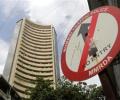
D-Street is hoping RBI policy review meeting on Tuesday will uphold its stand on easing of interest rates

However, NFTs and Metaverse are in their first-generation (Gen 1) or initial phase and the market is filtering the assets from the point of view of their worthiness. NFTs having real artistic value have not participated as much in the fall. Some innovations are also happening or expected going ahead, which will take this asset class to the next phase.

While large-cap funds, in three months, yielded gains of 26.3%, small-cap funds are up 37.9%, and mid-cap funds fetched returns of 29.9%.

The housing finance major issued non-convertible debentures and warrants to raise another Rs 4,000.03 crore.

Experts say foreign investor sentiment was bolstered by the US Federal Reserve's decision to go slow with interest rate hikes and hopes of political stability.

Amid lowering of bank deposit rates and falling yields from traditional investment vehicles like gold and real estate, investors are fast shifting to financial assets. The MF sector is emerging a clear beneficiary of this trend.

RBI governor Raghuram Rajan is likely to cut rates in next monetary policy.

Gold, which was hovering around $1,321 an ounce in January 2019, has already breached $1,600 per ounce in the past few sessions to a seven-year high.

'Yet the market didn't do all that badly because it was cushioned by domestic inflows.'
